
Over the last few years, low-power wide-area networking (LPWAN) has quietly moved from the Internet of Things into the hands of radio experimenters. One of the most compelling examples is Meshtastic—an open-source, LoRa-based mesh-messaging system that has gained real traction among amateur radio operators. While Meshtastic is not amateur radio in the regulatory sense, it aligns remarkably well with the technical curiosity, emergency-communications mindset, and experimentation culture that define the amateur service.
This article explains what Meshtastic is, how it works, and why so many hams are incorporating it alongside traditional VHF/UHF and HF operations.
What Is Meshtastic?
Meshtastic is an open-source project that enables off-grid text messaging and telemetry using inexpensive LoRa radios. Devices automatically form a self-healing mesh network, relaying messages node-to-node without relying on cellular, Wi-Fi, or Internet infrastructure.
Key characteristics include:
- LoRa modulation for long range at very low power
- Store-and-forward mesh routing
- End-to-end encryption (AES)
- Smartphone and desktop clients (Bluetooth, USB, Wi-Fi)
- Open hardware and firmware ecosystem
Typical ranges vary from a few kilometers in dense urban areas to tens of kilometers line-of-sight with elevated antennas—performance that immediately catches the attention of amateur radio operators.
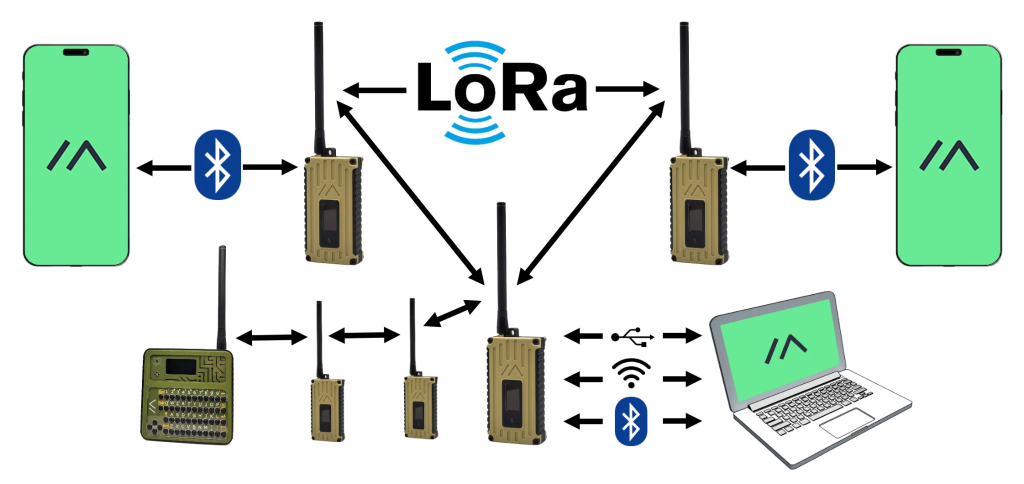
A Meshtastic node consists of a small microcontroller paired with a LoRa transceiver. Each node periodically announces itself and listens for traffic from nearby peers. Messages are:
- Injected by a user (via phone or PC)
- Broadcast over LoRa
- Relayed by intermediate nodes
- Delivered to the destination or flooded through the mesh
Nodes can be configured as:
- Client nodes (handheld or mobile)
- Router nodes (always-on relays)
- Repeater nodes (optimized for range and uptime)
This architecture mirrors many concepts familiar to hams—packet radio, digipeaters, and store-and-forward networking—just implemented with modern silicon and ultra-low power budgets.
Why Meshtastic Appeals to Amateur Radio Operators
Although Meshtastic operates under unlicensed ISM bands in many countries, it resonates strongly with the amateur radio community for several reasons.
1. Emergency and Resilience Mindset
Amateur radio has long focused on communications when infrastructure fails. Meshtastic fits naturally into that role:
- No dependency on cell towers or ISPs
- Battery and solar-friendly operation
- Rapid deployment of ad-hoc networks
Many hams use Meshtastic as a situational-awareness and messaging layer alongside voice repeaters or HF nets.
2. Experimentation and Homebrew Culture
From antenna experimentation to firmware customization, Meshtastic encourages the same hands-on approach that amateur radio thrives on:
- Custom antennas and enclosures
- Elevated nodes on towers or rooftops
- Solar-powered hilltop routers
- Firmware modifications and telemetry integrations
This is classic ham-radio experimentation, simply applied to a different modulation and network model.
3. Complement to VHF/UHF Voice and APRS
Meshtastic does not replace traditional amateur modes—it augments them.
Common hybrid use cases include:
- Meshtastic for silent, low-power text messaging
- VHF/UHF voice for real-time coordination
- APRS for position reporting and public infrastructure integration
- HF for regional or long-haul backup
Think of Meshtastic as another tool in the communications toolbox, not a competitor.
Licensing and Regulatory Considerations
This distinction is important:
- Meshtastic typically operates under unlicensed ISM rules (e.g., 915 MHz in the U.S.)
- Messages are encrypted, which would not be permitted on amateur bands
- No callsigns are required or used
By contrast, amateur radio is regulated, callsign-identified, and (with limited exceptions) unencrypted. Organizations such as ARRL continue to emphasize transparency and spectrum discipline within the amateur service.
Many hams intentionally keep Meshtastic and amateur radio operations logically and ethically separate, even if they share power systems, enclosures, or mounting locations.
Typical Ham-Adjacent Meshtastic Deployments
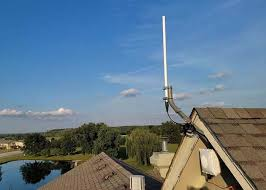
Common deployments you will see among amateur radio operators include:
- Hilltop or tower-mounted router nodes with omnidirectional antennas
- Go-kits pairing a handheld Meshtastic node with a VHF/UHF HT
- Vehicle-mounted nodes for convoy or event coordination
- Permanent neighborhood meshes supporting local preparedness groups
The overlap with repeater siting, antenna theory, and RF grounding is obvious—and appealing.
Meshtastic vs. Amateur Packet Radio
Veteran hams often recognize Meshtastic as a modern cousin of classic packet radio:
| Feature | Packet Radio (AX.25) | Meshtastic |
|---|---|---|
| Typical Power | Watts | Milliwatts |
| Bandwidth | kHz | Hundreds of Hz |
| Range per Watt | Moderate | Very high |
| Encryption | No | Yes |
| Infrastructure | Amateur | ISM / unlicensed |
Both have value; Meshtastic simply reflects newer constraints and design goals.
The Bigger Picture
Meshtastic is not amateur radio—but it feels like amateur radio in all the ways that matter to operators:
- RF experimentation
- Community-built infrastructure
- Emergency preparedness
- Learning by doing
For many hams, Meshtastic has become a quiet, always-on data layer that complements their licensed operations without replacing them. It reinforces the idea that radio is not just about talking—it is about connecting, adapting, and staying resilient when conventional networks disappear.
Final Thoughts
If you are an amateur radio operator who enjoys portable operations, emergency communications, or RF experimentation, Meshtastic is well worth exploring. It fits naturally beside APRS, AllStar, repeaters, and HF—and it scratches the same technical itch that drew many of us to radio in the first place.