
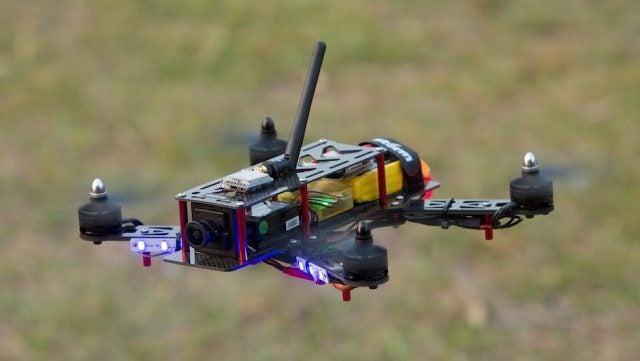
An FPV drone—short for First Person View drone—is a type of unmanned aerial vehicle that allows the pilot to see exactly what the drone’s onboard camera sees in real time. Instead of flying by watching the drone from the ground, the pilot wears FPV goggles or looks at a dedicated screen, creating the sensation of being inside the aircraft itself.
FPV drones are widely used for racing, freestyle flying, and immersive cinematic footage, and they represent a very different philosophy from consumer camera drones.
How FPV Drones Work
At a high level, an FPV drone consists of several core systems working together:
- Camera – Mounted at the front of the drone, often angled upward to match forward flight.
- Video Transmitter (VTX) – Sends live video from the camera to the pilot.
- Receiver & Goggles – The pilot wears goggles or uses a monitor to receive the live feed.
- Flight Controller – Interprets pilot inputs and stabilizes the aircraft.
- Radio Transmitter – Handheld controller used by the pilot to fly the drone.
- Motors & ESCs – Provide thrust and precise control of movement.
The result is low-latency, real-time video that enables precise control even at high speeds or in tight spaces.
FPV vs. Standard Camera Drones
FPV drones are often compared to consumer camera drones, but the experience and use cases are very different.
| Feature | FPV Drone | Standard Camera Drone |
|---|---|---|
| View | First-person (immersive) | Third-person (screen-based) |
| Control | Fully manual | GPS-assisted, stabilized |
| Speed | Very high | Moderate |
| Learning Curve | Steep | Beginner-friendly |
| Use Cases | Racing, freestyle, action cinematography | Photography, mapping, surveying |
FPV drones prioritize agility and immersion, while standard drones prioritize stability and ease of use.
Types of FPV Flying
FPV Racing
Designed for speed and precision, racing FPV drones navigate obstacle-filled courses at extreme speeds. Pilots rely entirely on their reflexes and situational awareness.
FPV Freestyle
Freestyle flying focuses on creativity—flips, rolls, dives, and acrobatic maneuvers. This is where FPV truly shines as a form of aerial expression.
Cinematic FPV
Cinematic FPV combines smooth control with dynamic motion, producing dramatic footage that traditional drones cannot easily capture—such as flying through buildings, vehicles, or natural features.
Why FPV Drones Are So Popular
FPV drones have grown rapidly in popularity because they offer:
- Total immersion – You feel like you are flying.
- Unmatched maneuverability – Tight spaces, fast dives, and complex movements.
- Customization – Many FPV drones are built or tuned by the pilot.
- Skill-based flying – Mastery is earned, not automated.
For many pilots, FPV flying feels closer to piloting an aircraft than operating a camera platform.
Are FPV Drones Hard to Fly?
Yes—and that’s part of the appeal.
FPV drones are typically flown in Acro (manual) mode, meaning:
- No self-leveling
- No GPS hold
- No automatic braking
Mistakes result in crashes, which is why simulators are strongly recommended before flying a real FPV drone. With practice, however, pilots gain exceptional control and confidence.
Who Should Consider an FPV Drone?
FPV drones are ideal for:
- Hobbyists who enjoy hands-on learning and tuning
- Pilots interested in racing or freestyle flying
- Content creators seeking dynamic, immersive footage
- Technically minded users who enjoy building and configuring hardware
They are less ideal for users looking for instant results with minimal setup.
Final Thoughts
An FPV drone is not just a tool—it is an experience. Unlike traditional drones that emphasize automation and stability, FPV drones reward skill, practice, and creativity. Whether you are chasing gates on a race course, carving lines through obstacles, or capturing cinematic fly-throughs, FPV offers a level of immersion that no other type of drone can match.
If you are willing to invest the time to learn, FPV flying can be one of the most rewarding aspects of the drone hobby.