
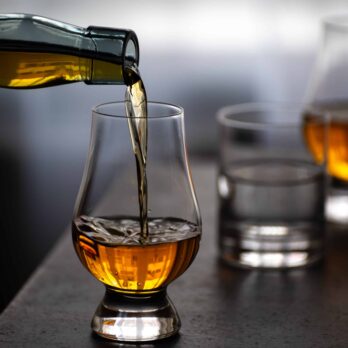
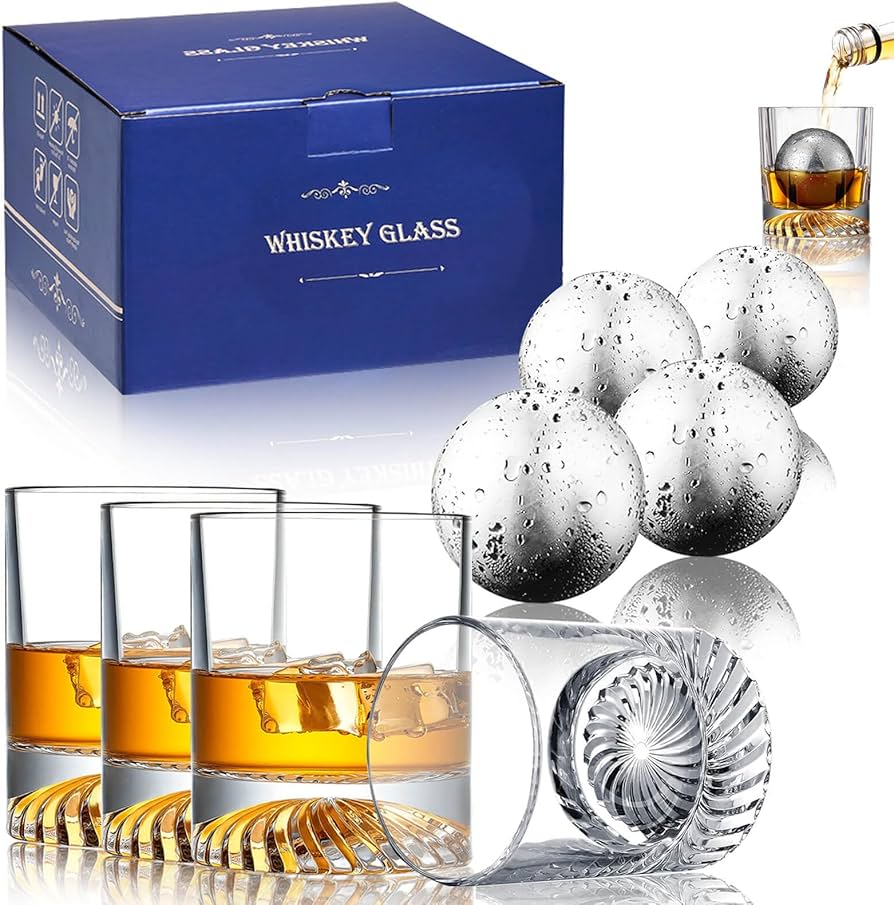
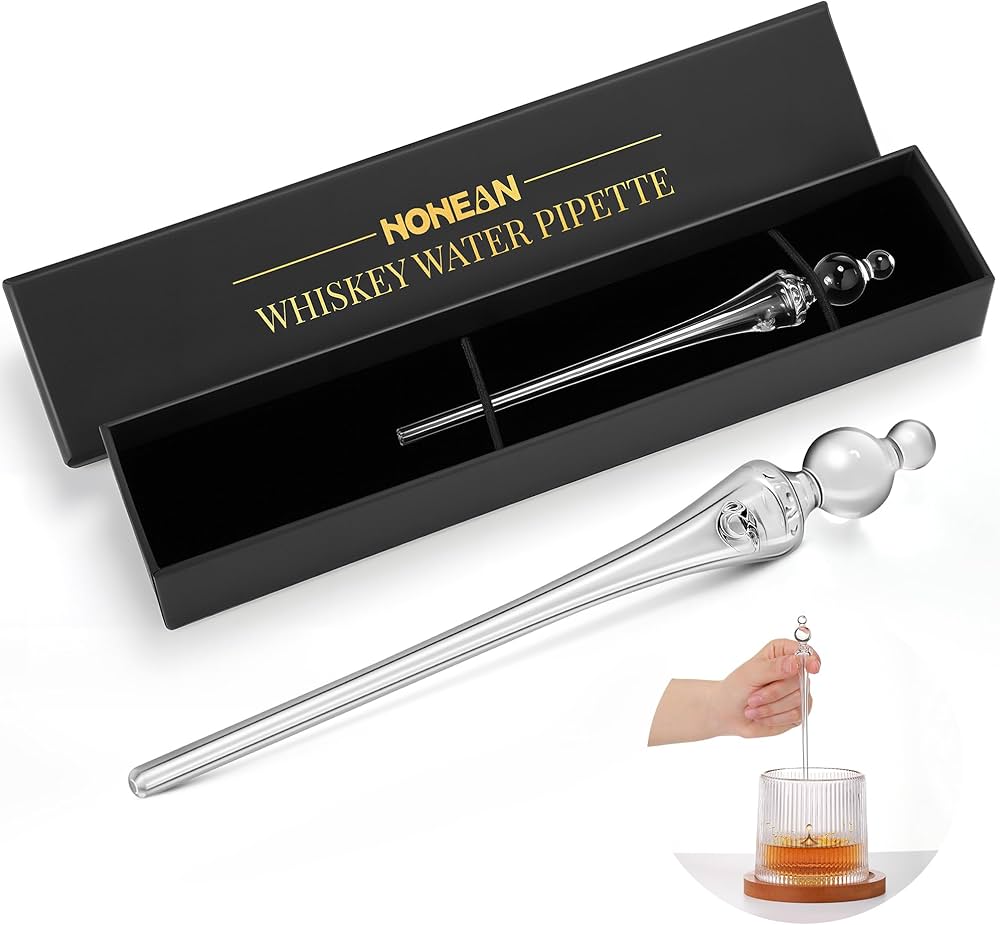
Few topics generate as much debate among whiskey drinkers as whether to add water or ice. Purists argue that whiskey should be consumed neat; others insist that dilution “opens up” the spirit. Both sides are partially correct—because dilution and temperature changes directly affect the chemistry, physics, and sensory perception of whiskey.
Understanding what actually happens in the glass helps you make intentional choices rather than following dogma.
Whiskey Is a Chemical System, Not Just a Beverage
At its core, whiskey is a solution of:
- Ethanol
- Water
- Volatile aroma compounds (esters, aldehydes, phenols)
- Non-volatile compounds (sugars, tannins, fatty acids)
These compounds interact differently depending on alcohol concentration and temperature. Small changes in dilution can dramatically alter what your nose and palate detect.
Why a Few Drops of Water Can Transform Aroma
Ethanol Masks Aromatics
High-proof whiskey contains enough ethanol to suppress or “trap” some aroma compounds. Ethanol molecules cluster around hydrophobic compounds, keeping them dissolved rather than allowing them to volatilize.
When you add a small amount of water:
- The ethanol concentration drops
- Aroma compounds become less soluble
- They migrate to the surface and evaporate more readily
This is why many distillers and blenders evaluate whiskey with a few drops of water—it often reveals hidden notes like fruit, honey, floral tones, or spice.
The Ouzo Effect (Briefly)
At certain dilution levels, whiskey exhibits a mild form of the ouzo effect, where hydrophobic compounds form microscopic droplets. This enhances aroma delivery without making the whiskey cloudy (unlike absinthe or ouzo).
Ice: Dilution Plus Temperature Control
Ice does two things simultaneously:
- Cools the whiskey
- Gradually adds water
Both effects matter.
The Physics of Temperature
Lower temperatures:
- Reduce volatility of aroma compounds
- Dull sweetness and bitterness
- Suppress ethanol burn
This is why ice often makes high-proof bourbon feel smoother—but also why it can mute complexity, especially in delicate whiskies.
Ice Type Matters More Than Most People Think
Small Cubes or Crushed Ice
- Rapid cooling
- Fast dilution
- Best for cocktails, not sipping
Large Cubes or Spheres
- Slower melt rate
- Controlled dilution
- Maintains balance longer
Clear Ice
- Fewer air bubbles and impurities
- Melts more slowly
- Produces less “watery shock”
For sipping whiskey with ice, one large, clear cube is the most controlled option.
Bourbon vs. Scotch: Different Reactions to Dilution
Bourbon
- Higher corn content → more sweetness
- Often bottled at higher proof
- New charred oak contributes vanillin and caramel compounds
Dilution effect:
A little water often enhances sweetness and reduces ethanol heat without destroying structure. Ice can work well, especially for barrel-proof bourbon.
Scotch Whisky
- Barley-forward, often more delicate
- Peated expressions rely on phenols
- Many are bottled closer to 40–46% ABV
Dilution effect:
A few drops of water can dramatically improve aroma, especially in peated Scotch. Too much ice, however, can suppress smoke and maritime notes.
Neat, Watered, or On the Rocks: A Practical Guide
| Method | Best For | Trade-Off |
|---|---|---|
| Neat | Evaluating structure and finish | Strong ethanol burn |
| Few drops of water | Aroma exploration | Requires restraint |
| Large ice cube | High-proof sipping | Reduced complexity over time |
| Crushed ice | Cocktails | Heavy dilution |
There Is No “Correct” Way—Only Intentional Choices
From a scientific perspective:
- Water reveals aromas
- Cold smooths texture
- Excess dilution flattens flavor
From a practical perspective:
- Your palate, proof tolerance, and mood matter more than rules
Many experienced whiskey drinkers keep a dropper, a glass of ice water, and a large cube nearby—adjusting each pour as the whiskey evolves.
Final Thought
Whiskey is dynamic. It changes minute by minute in the glass as temperature rises and dilution increases. Understanding the science behind those changes turns drinking whiskey from a static experience into an interactive one.
Whether it’s bourbon, Scotch, or anything in between, the best pour is the one that lets you taste the most—on your own terms.